Generic selectors
Exact matches only
Search in title
Search in content
Post Type Selectors

Loreto

Loreto, located in northeastern Peru, is the country’s largest region and one of its most impressive destinations. This vast Amazonian territory is covered by lush, dense vegetation, with gently rolling hills and extensive undulating surfaces crossed by the numerous rivers that form part of the majestic Amazon River basin. Despite its enormous size—368,852 km²—Loreto is one of the least populated regions in Peru, allowing it to preserve its nature almost intact.

Photo by DC_Colombia on instockphoto

Its capital, Iquitos, is the main gateway to the Peruvian Amazon and one of the most unique cities in the country, as it is only accessible by air or river. From here, travelers can delve into exotic landscapes and unique experiences in the heart of the jungle.
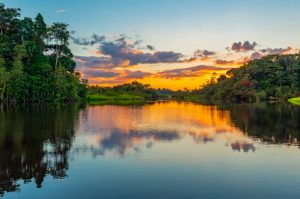
Photo by SL_Photography on istockphoto

Loreto is home to natural treasures of incalculable value, such as the Pacaya Samiria National Reserve, known as the “jungle of mirrors,” which is home to iconic species such as pink dolphins, as well as an extraordinary diversity of wildlife. Likewise, the Allpahuayo Mishana National Reserve stands out for its peculiar white sand soils and the presence of endemic birds and ecosystems that are unique in the world.

Its Amazonian forests, which grow on white sand soils, shelter a surprisingly diverse flora and fauna, making Loreto an ideal destination for lovers of nature, biodiversity, and authentic experiences in direct contact with the Amazon.

Good to know

  • Location
    Northeast of the country. It limits to the north with Ecuador and Colombia, to the east with Brazil, to the south with the department of Ucayali and to the west with the departments of San Martín and Amazonas.
  • Altitude
    220 meters above sea level. (Iquitos)
  • Climate
    It is hot, humid and rainy.
  • Seasons
    Empty (april-september) and growing (october-march).
  • Indispensable to bring
    Comfortable clothes for walking, light shoes, mosquito repellent, sunscreen, hat, sunglasses, long sleeves, flashlight, cash, and camera.
  • Distance to other cities
    Iquitos - Pucallpa 587 km.
    Iquitos - Leticia (Colombia) 368 km.
  • Fun fact
    In Iquitos there is neither summer nor winter. The seasons are measured according to the waters of the rivers, therefore, there is only: empty (April-September) and rising (October-March).

Main tourist attractions

Iquitos city

Capital of the department of Loreto and the largest Amazonian city in Peru. In Iquitos you can walk its streets appreciating its architectural beauty, walk along the Tarapacá boardwalk, taste delicious food and enjoy the warmth and joy of its people.

Pacaya Samiria National Reserve

Pacaya Samiria, the largest flooded forest in the Amazon as well as the largest reserve in Peru, was declared a National Reserve in February 1982, to conserve its valuable flora and fauna resources, as well as its beautiful landscapes. Its extension exceeds 2 million hectares, territory shared between the provinces of Loreto, Requena, Ucayali and Alto Amazonas.

This impressive place is located 183 kilometers southwest of Iquitos. Where you will find abundant fauna where there are 130 species of mammals; 330 species of birds; 150 species of reptiles and amphibians and; 250 species of fish. Its vegetation is one of the richest in species of the tropical forest. The flora of the reserve is varied and impressive, having identified nearly 850 species so far, with a large presence of palm trees and 22 species of orchids.

Alpahuayo Mishana National Park

It was created in January 2004, with the aim of protecting one of the largest white sand forests or “rods” in the Peruvian Amazon, an ecosystem rich in endemic flora and fauna, with many species that have not yet been fully identified by The science. Researchers have reported the existence of 145 species of mammals, 476 birds, 120 reptiles, 83 amphibians, 155 fish, 522 butterflies, in addition to 1,780 plant species.

Some of these species are new to zoology, such as the equatorial huapo primates (Pithecia aequatoriales) and the black stump primate (Callicebus lucifer); the antbirds Herpsilochmus gentryi, Percnostola arenarum and Myrmeciza castanea and; the Zimmerius villarejoi flytrap. The reserve has more than 58 thousand hectares, belonging to the community of Mishana, province of Maynas.

Quistococha Tourist Park

It is located at Km. 6.3 of the Iquitos-Nauta Highway, to the southwest of the city of Iquitos. It is built around the Quistococha lagoon.

The complex has 369 hectares and has an artificial beach known as Tunchi Playa; In addition, you will find there a museum, an aquarium, a serpentarium and trails for walks around the lake, which has a depth of 8 meters.

Let’s discover together the magic of Perú…

Countless paths to travel and magical places to discover. Do not miss the news we have for you about our trips and destinations. 😉